Why Final Day Ads are so Important

A huge part of the work we do at our Facebook ads agency comes down to launch strategies. In fact, that’s our team’s FAVE part of this whole thing — especially when we get to help lead our clients with everything from launch prep all the way to reaching launch goals. 

Here’s the thing: the Facebook ads we run over here at System Envy are a massive part of the launch strategies that our clients use.

Because they work. 🙂

And, more importantly, we’re always on the move here to continually improve our clients’ launches — which is where the focus on final day ads have come into play!

Okay, so… lemme explain.

When our clients are running their launches and we’re prepping their ad strategies, we’re all putting a lot of thought into the customer journey, especially on Facebook. People are so bombarded with content and sales and things to remember each and every day, so we have to get really strategic about how they’re given ads for a launch.

Enter: human nature, and needing to understand it.

And humans forget — which means that most of us tend to get to the last day possible to do something we meant to do, only to… well, forget about it.

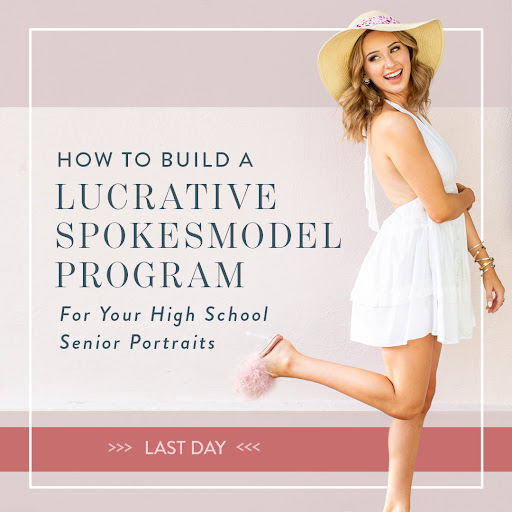
This is where last day ads come in, AKA busting through the noise of life and Facebook feeds and everything else to remind people that the product they were going to purchase/the course they wanted to join/the membership they wanted to sign up for is in its last and final day.

They’re magical.

This is why last day ads are an important part of all our ad strategies.

See, these final day ad campaigns are exactly what push people off of the fence and into a purchase at the last minute. They don’t have to be a big budget part of an ad campaign, either — they just need to be in the strategy, prepped and ready to go with messaging and graphics designed to encourage a purchase.

Plus, final day ad campaigns are what make all of your hard work worth it. A long launch comes alongside tons and tons of prep work in itself, from sales pages to product development and everything in between — and those final day reminders are often exactly what human psychology needs to make it all worthwhile.

So, here’s your challenge: in your next launch, implement one or two ads for the last day of your campaign, and watch your sales rise.

Promise.

My Office Tour

While these last couple of years have made WFH a huge part of pretty much everyone’s vocabulary, it’s not new for me! As an entrepreneur, I’ve been working from home for a looooong time… and I love it.

I especially love my home office. 

And, as someone who has worked from home for a long time, the space I work in is SO important to me — and I’ve really realized that the space I sit in each day is a huge determinant of the mental space and productive space that I sit in, too. I used my Business & Interior Design majors to cultivate a space I am obsessed with (and proud of), and wanted to show it off to you today!

Here’s a sneak peek inside of the System Envy HQ over at my home:

And here is the before and after! 

Plus, I have to say — the office wouldn’t be an office if I couldn’t actually, well, work from it. 

These are the WFH tips I swear by each and every day:

  • I get dressed every day: I drop my kids off at school, come straight home to make my bed and get ready, and then sit down at my desk. If I don’t do this, it’ll be 2 pm before I know it, and I’ll still be in my PJs.
  • I love a timer challenge: I’m a huge fan of the Focus Keeper app, which keeps me on task and productive. Plus, it helps me see how much time something is actually taking me, too.
  • I will allllways take breaks: I don’t ever want to get to the end of the day and realize I haven’t moved for 8 hours, so I’m super intentional about breaks. I’m a big fan of sitting in the sun, so I love to sit outside for 15-20 minutes if it’s sunny outside — and I also will use my Mirror for a 15-minute yoga session if I feel overwhelmed or like I’ve been staring at my screen for hours.
  • I’m pretty intentional about work hours: While I’ll sometimes need to check in later in the evening, I really try to end work at around 4 pm every day so I can pick up my kids from school and embrace the mama time while I still can!

There you have it — my favorite ways to spend my days in this cozy home office of mine, AKA one of my favorite places… ever. Now, I just need to figure out how I can have a home office in Rome, Mykonos, and the Bahamas.

Someone let me know if they’ve figured this out yet. 

Looking to shop? Check out the links below! 


Why Selling Directly from FB Ads Doesn’t Work

Why Selling Directly from FB Ads Doesn’t Work

I get a lot of questions from people new to or trying to learn more about, running ads. I loooove chatting things out and helping business owners craft successful ads. There seems to be one very common question, that I get all the time and we’re talking about it today.  What’s the question…Why aren’t my ads converting?  And yea, what’s the point if they’re not converting, eh?

If you know anything about Facebook ads, you know that there are a lot of variables that make up a successful ad, but my first question is always “Are you trying to sell directly from an ad?”.

Yes, selling is one of the primary reasons you’d want to use Facebook ads, but indirectly, not directly (unless you’re an ecomm biz). Sales ads need to be part of a larger sales pathway or funnel. Here’s several reasons why…


FACEBOOK ADS SHOULD BE VIEWED AS A SCALING TOOL

Facebook ads should be used as a scaling tool. Here’s what I mean – it’s best to use FB ads to reach a wider audience for a product, program, or service you have ALREADY had success selling (unless you’re a retail operation). If you have an offer that you aren’t able to sell to the people who already know and trust you, you won’t be able to sell it using ads. This is a common mistake. The solution is to figure out why people in your warm circle aren’t buying and then fix that first, before you invest money into ads. And don’t be discouraged as a lot of times an offer isn’t selling because of simple tweaks that need to be made. And MOST people/businesses have to do this to get the offer just right.


SELLING TO COLD AUDIENCES IS HARD

Trust is super, super important for any business, and building that trust should be a part of your ad strategy. It can be very difficult to get people to purchase directly from an ad without having already built trust (again, unless you’re a retail operation).

Therefore, it’s super smart to warm people up with your ads first and then retarget them with an ad for purchase. Think about it this way: Would you feel comfortable going to lunch with someone you’ve never met? You’d probably have some reservations. You might even think twice about meeting up. Your audience feels the same way. Until they get to know you, they might not be keen on giving you their hard earned dollars. 

So, butter them up first. Make them see why you’re the one they want to do business with. Focus your strategy more on building an audience who loves what you do before you try to sell anything and you’ll start seeing way more success from your ads.


PROVIDING YOUR AUDIENCE WITH VALUE

The keyword here is value. Before you start advertising something you want to sell, you need to give your audience a reason to believe you’re as awesome as you say you are. You do this by giving them something of value that will get them talking about you and trusting your word.

You can do this in a number of ways but my favorites are with a fun and engaging video ad or an ad for a free offer. Anything that gives value and helps people along in some way will work toward building your brand recognition and trust. You can always retarget those people who acted on your free offer later because you’ll know they were interested.

And this strategy should definitely not stop once you’ve built your ideal audience. You’ll always want to keep building that audience. More importantly, you want to hold onto the people you already have by continuing to provide them with the value that got them there in the first place!


THE BEST SELLING STRATEGY FOR FACEBOOK

Once you start creating your sales ads, you’ll still want to keep tacking on value instead of just selling, selling, selling. When people want to buy something, they’ll go buy it. 

Depending on the price of your offer, you may need additional touchpoints there before you will be able to achieve a sale. For example, let’s say you have a $497 digital course you’re offering. You might consider running ads for a free offer (PDF download, free training, etc), and then retargeting those people to invite them to a webinar where you’ll pitch your digital course. If your offer is lower-priced (under $50), you might not need that webinar piece.

You could test running ads to a free informational video and then retargeting people to a free opt-in and then pitch your low-priced offer by retargeting them with ads while simultaneously sending emails that pitch the low-priced offer.

People get tired of hearing me say the word “test” but it’s truly the way to success with FB ads. Everyone, even the most successful of businesses, has to test. The real magic with FB ads is once you’ve done a bunch of testing and can feed the results back into your newest marketing efforts. Your results will get better and better. 

Last but not least, try to reframe your mindset to not view unsuccessful ads as a failure but to see them simply as part of the marketing process. I don’t know anyone – myself included – who gets it correct, right out of the box, every time. Marketing is a process that consistently evolves as your business grows and morphs. Everything you learn along the way is a tool for future success.

Does this post resonate with you? Do you think you’ve been trying to sell too much in your ads instead of providing value? I’d love to hear about your Facebook advertising strategy so far and how it’s working for you – drop me a comment below!

What Copy Do I Need In Ads?

How important is ad copy? What details, angles and points should I include? What will compel people stop scrolling and take action?  These questions are so, so important for anyone thinking of creating a Facebook ad because copy is a huge component of how well an ad works. 

Q: How do I know what kind of copy my audience wants to see in my Facebook Ads?

A: Split-testing! (Okay, I know, this comes as no surprise!)

I’ve said it once and I’ll say it again: Split-testing is one of the best things you can ever get into the habit of doing when you’re creating Facebook ad campaigns. The same holds true for testing your Facebook ad copy

The thing is, ad copy comes in all shapes, sizes, and creativity levels. There’s:

  • Short copy (perfect for getting the point across quickly and making people take action)
  • Long copy (I really only recommend this if the copy is more story-like or super engaging)
  • Stories (meaning, tell a story in your copy to lead your audience to the conclusion that they need what you have because it has worked for you or others)
  • Engaging, eye-catching copy (like those with a bunch of emojis or special fonts that help catch someone’s eye and stop the scroll)

Before you start split testing copy, first consider the audience. Do they have time to read something super long (or are they busy people, like surgeons, who have little to no time to read a long post)? Do they NEED something long (i.e. they need to feel like you understand them in order to take action)?

You’ll also want to consider your brand voice. Make sure that it sounds like you speaking directly to your audience. There are obvious ways of doing this, for example, “Hey Photographers!”, but there are also more subtle ways of doing this by speaking to their direct pain points, and narrating how you can overcome those setbacks with your guidance. It’s also handy to add your personal sayings. For example, some greetings you might typically open your marketing emails with “Hey Friends”, “Hi Gals”, etc. can work well in ads as well for brand cohesiveness.

Another tip is to lean in on the benefits. Facebook ads actually flag copy that is too directive with the use of the word “you”. If you’re often saying “you feel this”, “you should do this”, or “you need this” it can come off as singling your audience out. You want to express how you understand your audience, and how you can help them. Outlining the benefits and what is included in your offer in a bullet list helps people see the value at a glance!

Beyond those tips, start testing different versions and you can decide what content types might work the best and go from there. But split-testing can usually help you decide between two or more content types, especially when you literally have no idea what copy your audience might prefer.

What Creative Do You Need for a Launch?

When you’re prepping for a launch, a key part of the overall launch strategy is the ad strategy you’ll deploy.

(I mean, of course! Right?!)

And while there are many pieces to every launch ad strategy, one of the most important is the creative. So, what creative DO you need for a launch?

This, friends, is an excellent question to ask — and an important one. It’s one that I get all the time. After all, the creative (AKA, the copy, the images, the videos, and everything else) is what makes prospects stop and take note. In a very busy world, this is huge! Without your creative, your ads will be passed by. It prevents people from moving to the next step in your funnel.

However, here’s the thing about ad creative…

Ad creative — and what you need — is always going to differ depending on the type of ad campaign you’re running. This goes for a launch, too! Some launches are going to be webinar-style and some launches are going to be challenge-style, a lot of launches follow the simple process of webinar/challenge/freebie opt-in —> retarget to sale.

So, when you’re tailoring your ad creative for a launch, you first need to get really clear on what type of launch it is that you’re doing in the first place. We’re a big fan of asking the following questions:

  • What are the KPIs for your launch?
  • Who are you targeting for this launch? An existing, warm audience? A cold one? Something in between? Both?
  • What does your target audience want to see? What do they resonate with?
  • Do you want to focus on relationship-building engagement, or does this launch go more in line with a direct, straightforward sales approach?

Once you’ve gotten clear on that aspect of your launch, you can move forward with the right creative — and I’ll share our go-to creative launch formula (as well as some examples!) below.


What Creative Do You Need for a Launch?

Over here, we’re big testers — and so we continue to tweak and adjust during launches for all of our clients! However, our base formula — for a webinar-style launch — always follows the same cadence and map. Plus, this formula can be easily adjusted for any type of launch you’re running.

Here’s the kicker, though: since we’re big testers, we place a huge emphasis on creative testing, as well. We’d recommend that you try out 3 pieces, or versions, of creative for each step in the formula (images, videos, Reels, or gifs are always worth testing).

The creative formula we use for webinar-style launches:

  • Ad/creative #1: Invite!
  • Ad/creative #2: Reminder — “Your free class/challenge/etc. is happening today!
  • Ad/creative #3: Replay — ”Did you miss it? Catch the replay.”
  • Ad/creative #4: Cart open — “Enrollment/doors is/are open!” (this is one where you could test even more than 3 versions of creative)
  • Ad/creative #5: Mid-cart bonus (we typically do 2 versions here)
  • Ad/creative #6: Cart close — “Doors are closing/time is running out!” (for these, test at least 3 — and try out a testimonial version, too. They can be super powerful in this stage)
  • Ad/creative #7: Final day — ”LAST DAY to sign up/enroll!” (we usually shoot for 2 versions here)


It’s really that simple — we promise. In fact, this is why we love the creative strategy behind a Facebook ads launch SO MUCH… because there is so much room to play around, to test the waters, and to try new things. And mark my words – the more you do it, the more quickly you’ll be able to do it for each future launch. Bookmark this one for your next launch, ok?!

How I Use Asana as an Entrepreneur: Content Edition

Over here, I make nooooo secret of how much I love Asana — AKA,  the ultimate project management software, and the one that we use for absolutely everything at System Envy HQ. From client workflows to internal processes, Asana is our #1 teammate for allllll the things. And, while we use Asana within several different categories, there’s one area that we REALLY rely on it for:

Content management.

So, if you’ve been looking for a true-blue method to manage content, create a killer editorial calendar, and streamline alllll your content processes, you’re in the right place.

Here’s why we love Asana for content

We’re always singing the praises of Asana (and, no… this isn’t sponsored, though we wish it was!), but there’s a few reasons why I want to really scream them when it comes to content. 

First, the ability to see tasks in a comprehensive view (AKA, month, day, week, etc.), and then also to collaborate with others on them makes it a no-brainer for planning content and working around schedules. But, on the other hand, it’s easy to use. Asana isn’t this clunky, 17-steps-to-find-your-task situation. It’s straightforward and helpful, just like we like our content itself to be.

How I Use Asana as an Entrepreneur: Content Edition

When it comes to trying out Asana for your content, there are a few best practices that we’d recommend following — and that we’ve tried and implemented in our own internal processes.

First up, get really granular with it! Asana gives you tons of leeway for categorizing tasks and structuring your schedule, so take advantage of that by breaking all of your content down, piece by piece, within the platform. Wondering what we mean? Instead of using Asana to plan out just an entire month’s of content on a high level, use it to really define specific goals. For instance, we have separate workspaces and tasks for blogging, email marketing, IG captions, Reels ideas, video content, and everything in-between. 

Then, keep it organized. This is key, because Asana is really robust — and, while it’s simple, you can also overwhelm yourself unnecessarily. We focus on keeping each task streamlined with one specific idea or category instead of looping tons of things into one, which is really essential when it comes to building cohesiveness and consistency in your content process.

(Bonus tip: keep all passwords, processes, and resources safe and all in one place inside of Asana, too!)

Next up? Timelines, which are arguably one of theeeeee best things to use Asana for, especially when it comes to content. When you’re planning your content out for the month or quarter, you can look at every date from a birds-eye view — something that’s key to making things happen on time. We bake in tons of time for content to get made, and we make that a huge part of our process. 

For instance, our content tasks in Asana look a lot like this:

  • Create topic ideas
  • Gather notes around content/create an outline if necessary
  • Assign content to whoever’s going to write it, whether that’s our copywriter or me
  • Review and edit content, if needed
  • Upload content to ShowIt/social media
  • Schedule content

And, that’s just one piece of content! There’s usually about a month of lead time between all of those tasks, which means we have quite a few Asana subtasks ready to fill. But, it’s all in one place… and that changes everything. We’re able to assign those tasks, get those approvals, and provide that feedback — win, win, win.

There you have it — how we utilize Asana to make content management a breeze over here! Have any other process, workflow, or system Q’s you wanna ask? Let us know.

Why Mid-Cart Bonuses Can Help Boost Sales

Why Mid-Cart Bonuses Can Help Boost Sales

When it comes to an ad strategy during the sales portion of a launch, there’s usually two sections that people really, really focus on: cart open and cart close.

But, what if I told you that you’re missing out on a huuuuuuge opportunity if you don’t also focus on mid-cart?!

Because you are. 🙂

See, cart open and close are super important. Obviously. But, at the same time, what you do during that mid-cart phase arguably matters just as much (if not more). It’s why I liiiiiiive for a good mid-cart bonus during a launch.

Let’s chat.

Why is mid-cart so important?

When mapping out a launch, it really looks like this: there’s a ton of excitement (and sales!) at cart open (people are usually riding the momentum of a webinar or challenge), then there’s a lull in sales, and then the momentum increases again right before the cart close.

And, I’d bet you know exactly where that lull is taking place, huh? The mid-cart.

When you can optimize that mid-cart phase with tons of value (and bonuses!), you can boost the heck out of your sales. In fact, we’ve seen an increase as big as 30% in sales during the 48-hour mid-cart bonus period. (!!!)

That’s a big boost, huh?! 

Now, you’re probably thinking “why on earth haven’t I been paying attention to that mid-cart period?!” but, as always, I’ve got you.

Enter: my fave tool, AKA mid-cart bonuses

We recommend mid-cart bonuses to all of our clients, especially to anyone with a longer cart open period. See, when you can add a lil’ bonus round situation to your mid-cart period, you’ll encourage those people who, A) were going to wait until the last minute, or B) were going to forget, to go ahead and lock in their purchase.

And that’s the best thing you can ask for, huh?!

There are tons of mid-cart bonuses you can implement into your launch, but here are some of the ones we’ve seen be super, super successful:

  • Checklists: People LOVE a good checklist, ok?! Like, really love a good checklist.
  • Video trainings or exclusive podcast episodes: Giving people a chance to digest new content or info via a video or podcast can be a really good way to encourage a purchase.
  • Extra course material: If you’re launching a course, it’s neeeeever a bad idea to offer additional material for your early purchasers.
  • Live components via calls or strategy sessions: If you’re launching a high-ticket program or course, tacking on an add’l call or strategy sesh can be a humongous value add.
  • An additional course you offer (a la buy one, get one).

Now, those aren’t your only bonus options, either! With a mid-cart you can really implement anything (even a flash sale discount), and you can keep it as limited-time as you’d like.

Just don’t forget about that mid-cart piece, k?!

We’re obviously #obsessed (and then some) with helping our clients rock their launches over here at System Envy. If you’re a 7 or 8-figure creative entrepreneur looking to rock your next launch, let’s chat.

How I use Asana as an Entrepreneur

How I use Asana as an Entrepreneur

Can we all please just talk about how much the internet has improved entrepreneur life?! Am I showing my age here LOL?

And, I loooooove a good online tool for running my business.

Enter: my ultimate favorite, Asana. I’ve tried quite a few project management softwares within my business and with my team, but Asana is the one I just keep coming back to, over and over again.

Why, you ask? It has an incredibly easy (and pretty) interface, it’s super intuitive for clients and team members alike, and it doesn’t feel clunky and scary to figure out.

AKA, the trifecta.

So, I wanted to share a little bit more about why I love Asana so much AND how I use it as an entrepreneur. 

First up: here’s an Asana primer.

To put it simply, Asana is a project management software for teams, for individuals, and for clients. It uses a calendar and to-do list method to help you assign out tasks and build out projects, and, lemme tell ya…

…it’s a life saver.

It also has a communication element that lets you talk back and forth on different projects, too, which makes it easy to streamline and simplify. Plus, the organization? OOH. We love.

How I use Asana as an Entrepreneur

At System Envy, we actually use Asana for a couple different reasons — content management, client work, and day-to-day operations. That’s why I’m so obsessed with it, actually: it’s a true-blue workhorse, and we put it to work.

Here are our fave ways to use it in this business:

Creating client consistency: Consistency is absolutely essential when you run a service-based business, especially one like ours where there’s so much data and so many goals to reach. 

The key? Using project templates so that every single client has a consistent experience, and so every single team member knows exactly what they need and when they need it.

Onboarding, reporting, and even launching with clients is so much easier with Asana, because we have templates for absolutely everything. Then, when it’s time for a new project or for a status update on an existing one, it’s easy to duplicate an existing template or project and be set up in minutes.

Self-tasks AND team tasks: I also use Asana a lot for its most famous feature, AKA the to-do lists feature! I can build tasks for myself to follow up for keeping the team on track, but I can also assign tasks — or have tasks assigned *to* me.

Our entire team loves it, because it’s so easy to make sure things aren’t falling between the cracks… which is pretty dang essential when you’re managing clients and team members who are, quite literally, all across the country and abroad.

Plus, you don’t have to assign overarching, huge tasks out, either! The subtask feature inside of Asana lets us build small, achievable tasks that aren’t at all overwhelming or overbearing. And, these subtasks are also really key to building processes within the team, too.

High level looks: With several different clients (and a business to run), it’s definitely really important to be able to see the week, the month, the quarter, and even the year at a glance. 

With Asana, we’re able to map out client projects and team tasks to see time periods unfold in front of us in different calendar views, which is so, so helpful when it comes to things like client launches or prepping for new products in our own digital suite.

In case you can’t tell, we’re pretty dang obsessed with Asana over here at System Envy… and I’m convinced it’s absolutely the easiest-to-use, most aesthetically pleasing project management software around. 

Check it out here.

Case Study Spotlight: Let’s Talk Content

Case Study Spotlight: Let’s Talk Content

I’m convinced that I have the absolute best clients… ever. For tons of reasons. 🙂

Watching their successes and their business growth has been paramount to our growth here at System Envy, and I love being able to dig into client launches to teach other people how to do the same.

What the heck’s better than that, right?!

Lately we’ve been working with a client who has exemplified a strategy I want to share for a killer launch — enter: implementing a launch strategy with an existing next-level content library to make launching smooth like butta.

Okay, so let’s chat strategy.

Implementing launches with next-level content

So this client we’re talking about is a fantastic, smart-as-a-whip lawyer and digital entrepreneur who sells contracts online and teaches her fellow entrepreneurs to launch their own digital shops, too. 

We’re in launch mode with her around this incredible course of hers, and we’ve used one thing to really solidify and maximize her launch: AKA, the consistent, valuable content she’s *already* been creating.

By using this content strategy she already has (and that her audience trusts!), we’ve been able to capture people at the tippy-top of the sales funnel and then retarget them with an opt-in of some kind. Once they’ve opted in, we invite people to a webinar and then retarget for sale. It looks a little like this:

Engagement –> Opt-In –> Webinar/Launch –> Purchase 

Basically, it’s *the* best way to go about it… because we’re able to engage new and existing customers via the consistent and next-level content that she’s already producing.

So, here’s how to implement this in your own launch strategy…

We’re all about learning and then implementing, and we know you are, too. So, here’s what you’ll do: take an audit of your existing content (and if you’re not already creating it, start!). This could be your social media content, YouTube videos, Reels/TikToks, blogs, etc… the sky is the limit.

(Psst… videos are our fave, because they have to be watched from the platform itself. This is key for people who don’t want to click away from the page for content!)

Now, install some of that next-level content you already have at the top of your funnel! You don’t have to reinvent the wheel, you don’t have to create a ton of new stuff, and you don’t have to be stressed — you just use what you already have.

The. Best.

Once you do this, Facebook will track this data, allowing you to capture the engagement and reuse it down the funnel. Win, win, freakin’ win.

Here’s the truth: launching is full of lessons… and then some. Learning from ‘em is the best way to do it, and we’re all about it over here.

Lesson: Start long before your launch. Use what you have to nurture prospects via engagement ads. Then guide them through your funnel via strategic steps allll the way to a purchase. It works so well! And you should be creating consistent, strategic content anyway so the genius in this launch strategy is to make everything you’re doing go further and work toward a sale. 

Need some more advice on implementing the best of the best ad strategies for your next launch? Check out our resources here.

What Facebook Metrics Matter

What Facebook Metrics Matter

The Facebook ad world is  a big one, absolutely packed with random terms and tons of numbers to remember on any given day.

And, if you’re not actually a FB ad expert (which, hey! Most people aren’t!), it can be reaaaaally tricky to know which of those terms and numbers are, like, actually important to pay attention to.

See, every piece of Facebook ad data does matter in the long run, but there are really just a few we recommend our entrepreneurs pay attention to: budgets/frequencies, clicks, and good ole’ pixel events.

And, if you read that like “whaaat?!” don’t you worry — we’ve got you.  

First things first — personalize your Ads Manager dashboard.

When you take a look inside your Ads Manager dashboard, you’re going to see a ton of categories that you might not understand. The key? To personalize it so you see the good stuff!

If you visit your dashboard, you’ll see a little drop-down arrow next to the words “Column: Performance.” Click it, and select “Personalize Columns.” Now, you can personalize exactly what you see.
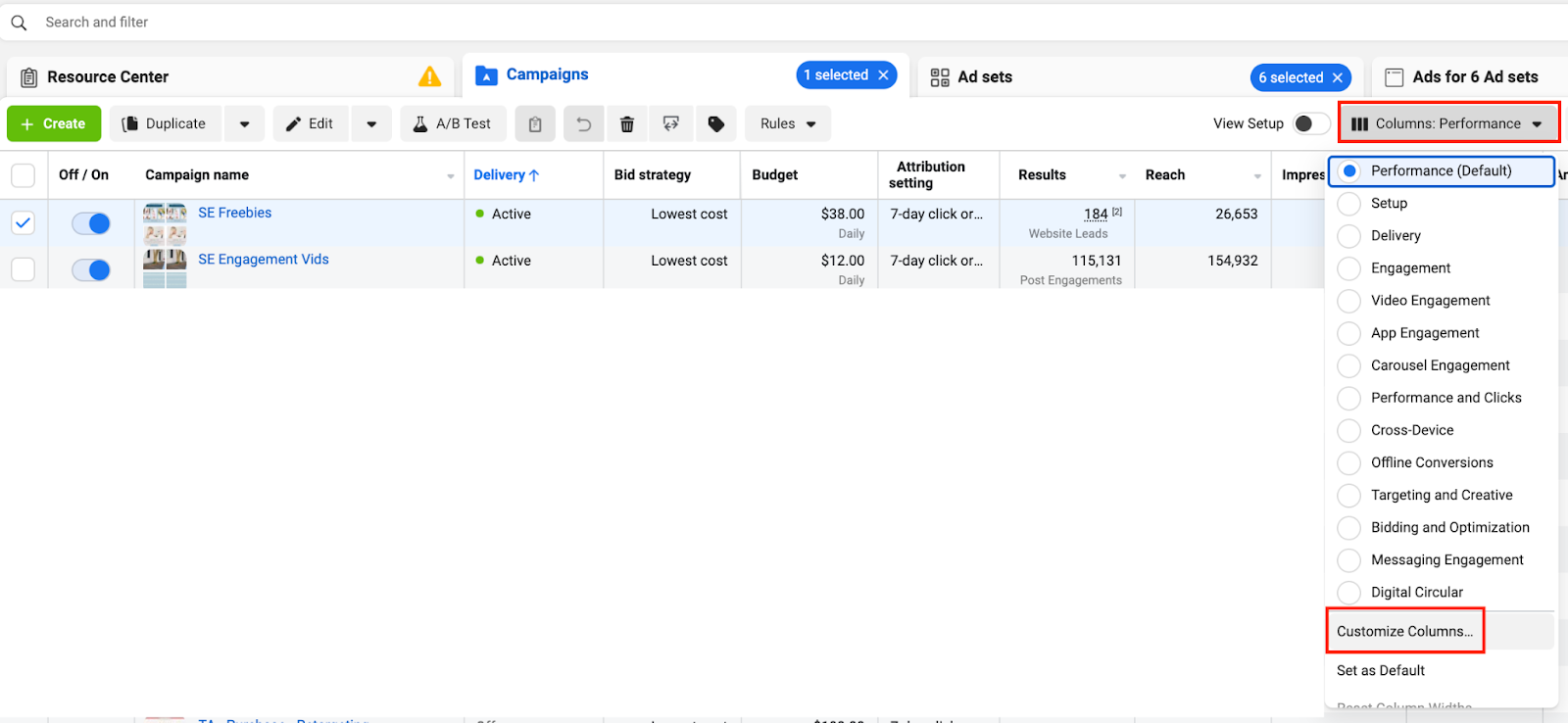
Select the metrics you actually want to see, and drag and drop them in the order you want! This almost immediately takes away an absolute ton of confusion for you, since you’ll be able to only see the things you already understand on a high level. Win, win. And feel free to use the pre-set options that you see in the image column above. If I’m looking at something quickly, I like the Performance and Clicks option. 

Still confused as to which ones you should highlight? Keep on readin’!

What Facebook Ad Metrics *Actually* Matter

While you build out your custom dashboard and start implementing a great ad strategy, there are a few things that are more important to pay attention to than anything else. 

A big part of a great Facebook ad strategy comes down to the very high-level basics: i.e., the ones you need to be knowledgeable about, no matter what. I recommend keeping this super general, too: costs and results.

So, bookmark this + keep coming back to it!

Results: Depending on your goal (leads, sales, engagement, etc), the Results column will be your best friend. If you aren’t seeing results, you can start diving deeper into why (see this blog post for how to diagnose this.) Your result will be whatever you chose for your objective when you set up the campaign. So, if it’s leads you’re going for, your result will be the number of leads. If it’s purchases, the number of purchases will show in that column. I’m sure you can see why this is my top metric as my clients are looking for results! And again, if you aren’t seeing results, try to diagnose why.

Costs: When you’re running an ad strategy, you’re obviously spending money in hopes for a desired result… which is why you absolutely must keep an eye on the amount you’re spending.

The Cost per Result column is where you’ll find the cost per action. So, again, if you’ve set up your campaign to get leads, you’re “cost per result” will really be your cost per lead. Once you run ads for some time, you can begin to predict what a great cost per lead is. And it will depend a lot on what your offer is, what industry you’re in, and who your audience is. I like to tell this story about a client I had many years ago. He was a diamond broker. We marketed his ads to diamond buyers. It was a hard sell. Our cost per result was gigantic but when we secured just one result (1 lead), it sure paid off. Tens of thousands of dollars. So, obviously his cost per lead/result would be much, MUCH higher than my current clients who are selling digital courses and offering freebies, right? So, our costs per lead are typically between the $1 – $8 range, depending on the audience). 

So, pay attention to your cost per result and test different creative, copy, audience and offers to see if you can get that cost down. 

Bonus: other metrics: Ok, so we’ve got the basics above. Now, when you’re ready, there are a few other metrics I like to look at. Cost per impression is always interesting to me. This is what it is costing you to “impress upon” 1000 people. During the holidays I was seeing this number up to the $80 range, which, for our audiences, was outrageous. And it allows me to think about strategy. Do I want to try other, less expensive audiences? Or is the return on ad spend still fruitful enough to keep going? Or do we want to focus on engagement ads (which are inexpensive) until after the holiday? So, cost per impression can be insightful. Frequency is also a number I like to pay attention to. Frequency is the number of times any ONE person has been shown your ad. I personally like to keep this number at 3 or below, however, during a launch, when we’re pushing people for just a few days toward a sale, that number might be higher. And I’ve heard other advertisers say that they let it reach 6 or even 8. It’s a personal preference but the further that number climbs, it’s an indicator to me that people are being bombarded again and again and we likely need to widen our audience. 

And, there you have it: the Facebook ad metrics that really and truly matter! Stop stressing about everything else, ok?!  In a nutshell, start high level and as you become more comfortable, you can start digging deeper!